


Ceramides: The Structural Lipids That Decide Whether Skin Actually Works
- Edwin James

- Dec 14, 2025
- 4 min read
Category: Skin Science

Ceramides are often talked about as if they’re just another moisturising ingredient — something you “add” to the skin for comfort or softness.
That idea is wrong.
Ceramides are not cosmetic extras. They are structural lipids. They determine whether the skin barrier is organised, resilient, and functional — or leaky, reactive, and unstable. When ceramide architecture breaks down, no amount of surface hydration can compensate.
This article explains what ceramides really do, why most ceramide products on the market fail to deliver meaningful results, and how the ceramide system used in SKNtelligence is engineered to work with skin biology instead of sitting inert on the surface.
Why Ceramides Matter More Than Almost Anything Else
Many of the most common skin complaints — dryness, sensitivity, redness, inflammation, slow repair — share the same root cause:
Disorganised barrier structure.
The outermost layer of the skin (the stratum corneum) is often described as a “brick and mortar” system:
corneocytes are the bricks
lipids are the mortar
Ceramides make up around 50% of that lipid mortar.
When ceramide structure, ratios, or chain lengths are disrupted:
water escapes too easily (high TEWL)
enzymes stop functioning optimally
repair slows down
skin becomes reactive and fragile
At this point, adding more moisturiser doesn’t solve the problem — because the architecture itself is compromised.
What Ceramides Actually Do (And Moisturisers Can’t)
Ceramides belong to a class of lipids called sphingolipids. Their defining ability is not hydration — it’s organisation.
When functioning correctly, ceramides self-assemble into highly ordered lamellar bilayers between skin cells. These layers:
regulate water movement
maintain mechanical strength
enable enzymatic lipid processing
protect against environmental stress
This lamellar organisation is what makes skin resilient.
Humectants attract water.
Occlusives slow evaporation.
Only ceramides rebuild structure.

The Problem With Most Ceramides on the Market
Here’s where things start to go wrong.
Many products claim to “contain ceramides” — but that doesn’t mean those ceramides are actually doing anything useful by the time they reach your skin.
Common limitations of conventional ceramide products
Most cosmetic ceramides:
are added as trace ingredients for label recognition
use non-physiological chain lengths
are present in incorrect ratios
are suspended in emulsions that prevent proper integration
oxidise or degrade before meaningful interaction occurs
In practice, this means many ceramides remain biologically inert — present on the INCI list, but unable to integrate into the skin’s lamellar system.
The result?
A product that sounds barrier-supportive, but functions little differently from a basic moisturiser.
Integration vs Coating: The Critical Difference
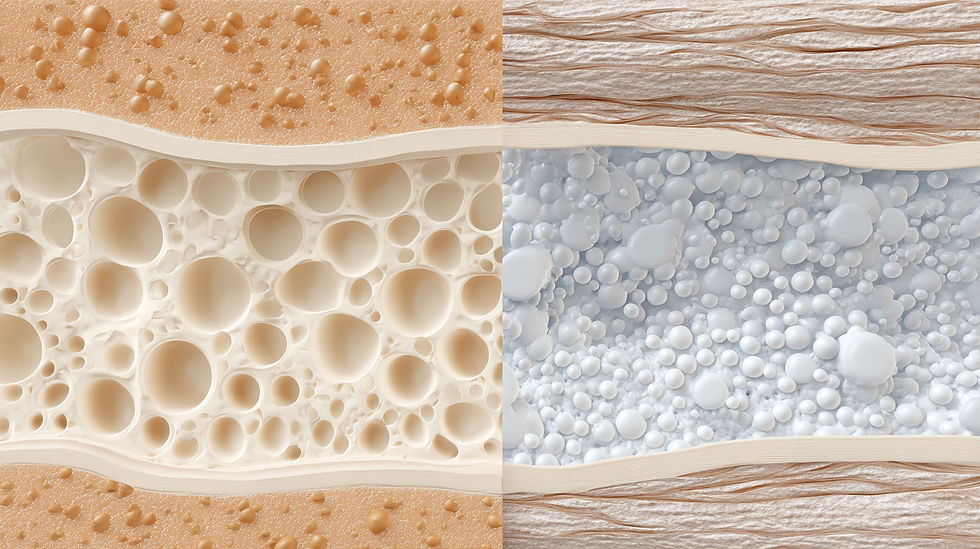
For ceramides to work, they must do more than sit on the surface.
A biologically functional ceramide system must:
match endogenous ceramide chain lengths
align with existing lipid structures
integrate into lamellar bilayers
support natural lipid processing pathways
This is where SKNtelligence takes a fundamentally different approach.
Why the SKNtelligence Ceramide System Is Different
The ceramide system used in C-03 Ceramide Drops is designed specifically for biomimetic integration, not topical decoration.
Instead of dispersing ceramides into a traditional moisturiser, SKNtelligence uses:
pre-solubilised Ceramide NP
delivered in a lamellar-compatible lipid system
free from water, fragrance, and volatile compounds
When applied to damp skin, this system allows ceramides to move into existing lipid pathways — where they can actually participate in barrier rebuilding.
This is why C-03 behaves differently from typical “ceramide creams”.
It’s not trying to hydrate first — it’s trying to rebuild structure.

What Happens When Ceramides Are Properly Integrated
When the barrier’s ceramide architecture is restored:
transepidermal water loss decreases naturally
hydration becomes stable instead of fleeting
sensitivity reduces over time
repair processes become more efficient
skin responds better to active treatments
This is why barrier repair often precedes visible improvements in tone, texture, and resilience.
Healthy skin isn’t achieved by constant correction.
It’s achieved by restoring the conditions that allow the skin to regulate itself.
Why C-03 Is a Dedicated Ceramide Step
C-03 is not a moisturiser. It is a concentrated ceramide delivery system.
By isolating ceramides into their own protocol step:
dosage remains precise
lamellar repair isn’t diluted by unnecessary actives
the barrier can be reinforced without triggering inflammation
This is why C-03 functions as the Reinforce phase of the Signal Matrix Protocol — it locks structure in place after repair has been initiated.
Ceramides and T-EGF: Why Structure Enables Repair
Barrier integrity and cellular repair are inseparable.
In EC-01, T-EGF supports epidermal signalling and renewal — but growth factor signalling requires a stable lipid environment to function properly.
Without organised ceramides:
signalling becomes inefficient
repair responses are blunted
cellular turnover becomes erratic
By reinforcing the barrier with C-03, ceramides create the structural foundation that allows T-EGF-mediated repair to proceed with higher fidelity.
This isn’t ingredient stacking.
It’s biological sequencing.
How Ceramides Fit Into the Signal Matrix Protocol
The Signal Matrix follows the order skin biology demands:
Ceramides come last because structure should lock in function — not precede it.

Final Thoughts
Ceramides are not optional skincare ingredients.
They are architectural necessities.
Without correct ceramide integration, the skin cannot stabilise, repair, or adapt — no matter how many actives are applied.
C-03 exists to restore that structure with precision, not decoration.
This is barrier science, not moisturisation.
👉 Explore the Signal Matrix Protocol

Comments